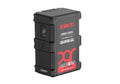
SWIT VOLTA-DC1600
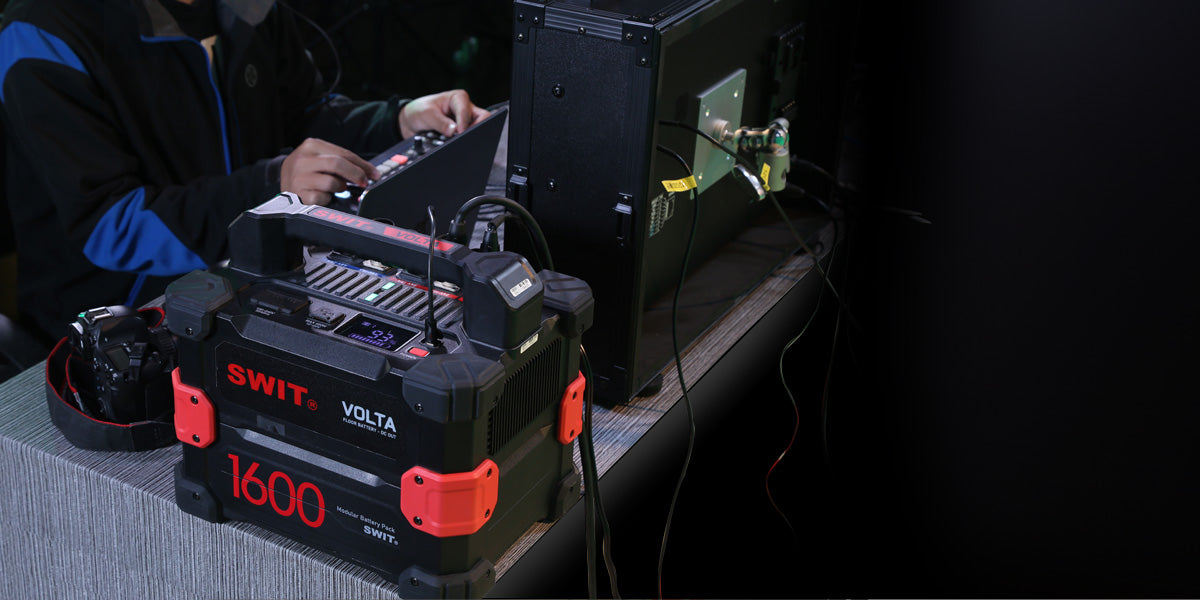
With a scalable capacity of up to 12.8kWh and a robust suite of DC outputs, the VOLTA Modular Add-On Floor Battery sets a new benchmark for on-set power infrastructure.
Power has always been one of the most unglamorous, yet critical, elements of any film or video production. Dead batteries mean missed shots, interrupted live streams, and costly downtime. SWIT Electronics' VOLTA Modular Add-On Floor Battery is engineered to eliminate that problem entirely, offering a flexible, expandable power system purpose-built for the rigors of professional cinematography.
Modular by Design
The VOLTA's defining characteristic is its modular architecture. Each battery unit delivers 1,600Wh of capacity, and units can be stacked, up to eight in total, reaching a combined capacity of 12.8kWh. Installation is straightforward: connect two power wires and one data wire between the control box and each battery unit. Whether you need a single pack for a run-and-gun documentary shoot or a full eight-stack for an all-day studio production, the system scales to match.
Versatile Power Outputs
The VOLTA-DC control unit provides a comprehensive range of outputs, all of which can operate simultaneously at a total continuous load of 1,700W. Outputs include 12V, 24V (×2), 48V (×2), and a 65W USB-C port. The 12V and 24V connectors use industry-standard XLR fittings compatible with a wide range of cinema cameras and ENG camcorders, while the 24V and 48V outputs are designed to drive high-demand lighting fixtures such as the ARRI Skypanel-X, Aputure LS-600 series, Creamsource Vortex, and KinoFlo units, among others.
Reliable in Extreme Conditions
The VOLTA uses automotive-grade NCM (Nickel-Cobalt-Manganese) lithium-ion cells, which offer superior energy density and low-temperature performance compared to standard LFP chemistry. Paired with SWIT's proprietary cold-startup process, the system is rated for reliable discharge in temperatures as low as −20°C, a critical advantage for productions in alpine, arctic, or other extreme environments.
Safety is managed by a Texas Instruments Battery Management System (BMS), which monitors each cell and provides protection against overcharging, over-discharging, and short circuits. The modular design also simplifies field maintenance: individual units can be replaced or serviced without taking the entire system offline.
Charging Flexibility
The built-in AC charger (100-240V, 450W) delivers a full charge in 6.5 hours and supports simultaneous charge and discharge, ensuring uninterrupted power delivery to connected equipment. For off-grid shoots, the VOLTA also accepts solar panel input via an XT60 port at up to 400W (12-60V), enabling a full charge in approximately 4.5 hours under optimal solar conditions. An integrated LCD display provides real-time readouts of power percentage, remaining runtime, and individual battery health.
Long-Term Storage
Unlike conventional batteries that require periodic top-up charges to preserve cell health, the VOLTA automatically enters a low-power sleep mode after 12 hours of inactivity. SWIT rates the cells for storage exceeding 10 years without maintenance charging, a meaningful consideration for rental houses and production companies managing large battery inventories.
BUY NOW:
SWIT VOLTA-DC1600 1600Wh Portable Power Station